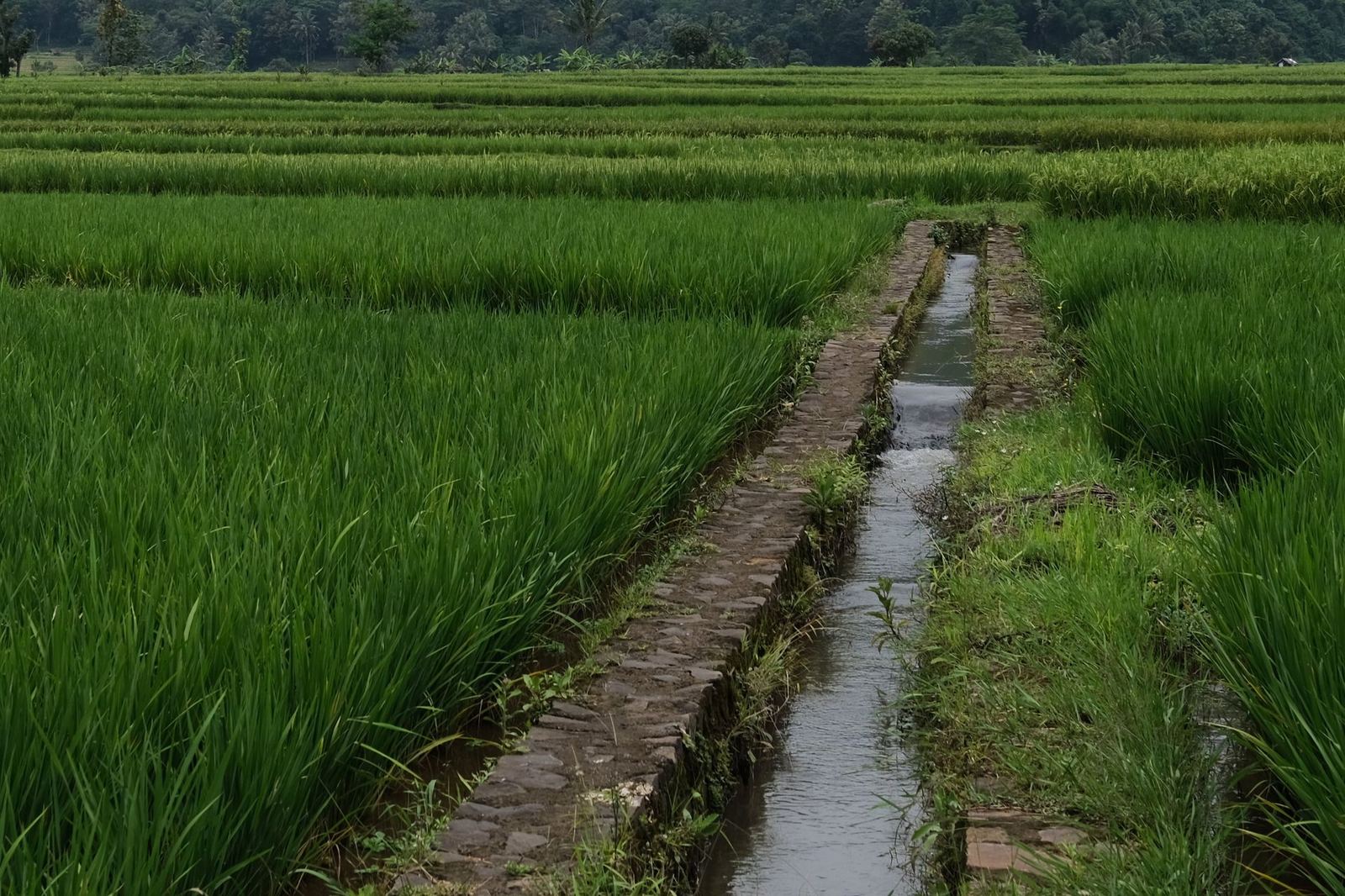
With the second stage of the Saint Louis Irrigation Network, another 16,000 hectares were opened to irrigated farming; rice yields rose 2.6 times.
The second stage of the Saint Louis Irrigation Network, carried out jointly by Selvi Tarım and Selvi Yapı Taahhüt, has come on stream. With the new stage, a total of 24,000 hectares in the river valley have been opened to irrigated farming, two-thirds of the final target of 38,000 hectares.
What was completed in the second stage?
- 46 kilometers of new main canal and 310 kilometers of distribution canals
- Two new pumping stations with a capacity of 1.8 million cubic meters of water a day
- A 1,200-hectare seed production and training farm
- Six rice processing and storage facilities
Yield increase
Land that was previously rain-fed and yielded one harvest a year now gives two harvests. Rice yield per hectare rose 2.6 times compared with traditional methods: from 1.9 to 4.9 tons. In vegetable production, drip irrigation cut water consumption by 38 percent.
A farmer-centered model
The project does not stop at building infrastructure. Some 2,400 farmers in the region received training in irrigation management, seed selection and post-harvest handling. Through cooperatives, farmers get low-interest input credit and their crops are bought at guaranteed prices. Forty-five percent of cooperative members are women, and a separate seed and credit package is offered to women farmers.
Water management and environment
Irrigation canals are operated under a minimum-flow rule that protects the needs of the river ecosystem. Every canal section has water measurement sensors, and data is sent to farmers' phones. A drainage and flushing program is applied to prevent soil salinization.
Future plans
In the third stage, another 14,000 hectares will be opened to irrigated farming and a food industry zone for processing the harvest will be built. The aim is to create 3,500 additional permanent jobs in the region.
More about Selvi Tarım is on the Agriculture and Food page.
Technology and monitoring
The entire network is monitored from a central control room. Water levels, pump efficiency and canal losses are measured in real time, and AI-assisted models adjust the irrigation schedule in advance based on weather forecasts. Satellite imagery analyzes crop health every ten days and sends farmers disease and water stress alerts.
Contribution to the local economy
During the second stage, orders worth USD 38 million were placed with local suppliers and 1,900 temporary and 640 permanent jobs were created.
From a farmer's story
Aminata Diop, who farms 4 hectares of rice in a village near Saint Louis, says she got two harvests a year for the first time: “We used to depend on the rain. Now the canal brings water to us; I no longer borrow money to send my children to school.” Average household income for cooperative farmers is expected to rise 70 percent within three years.